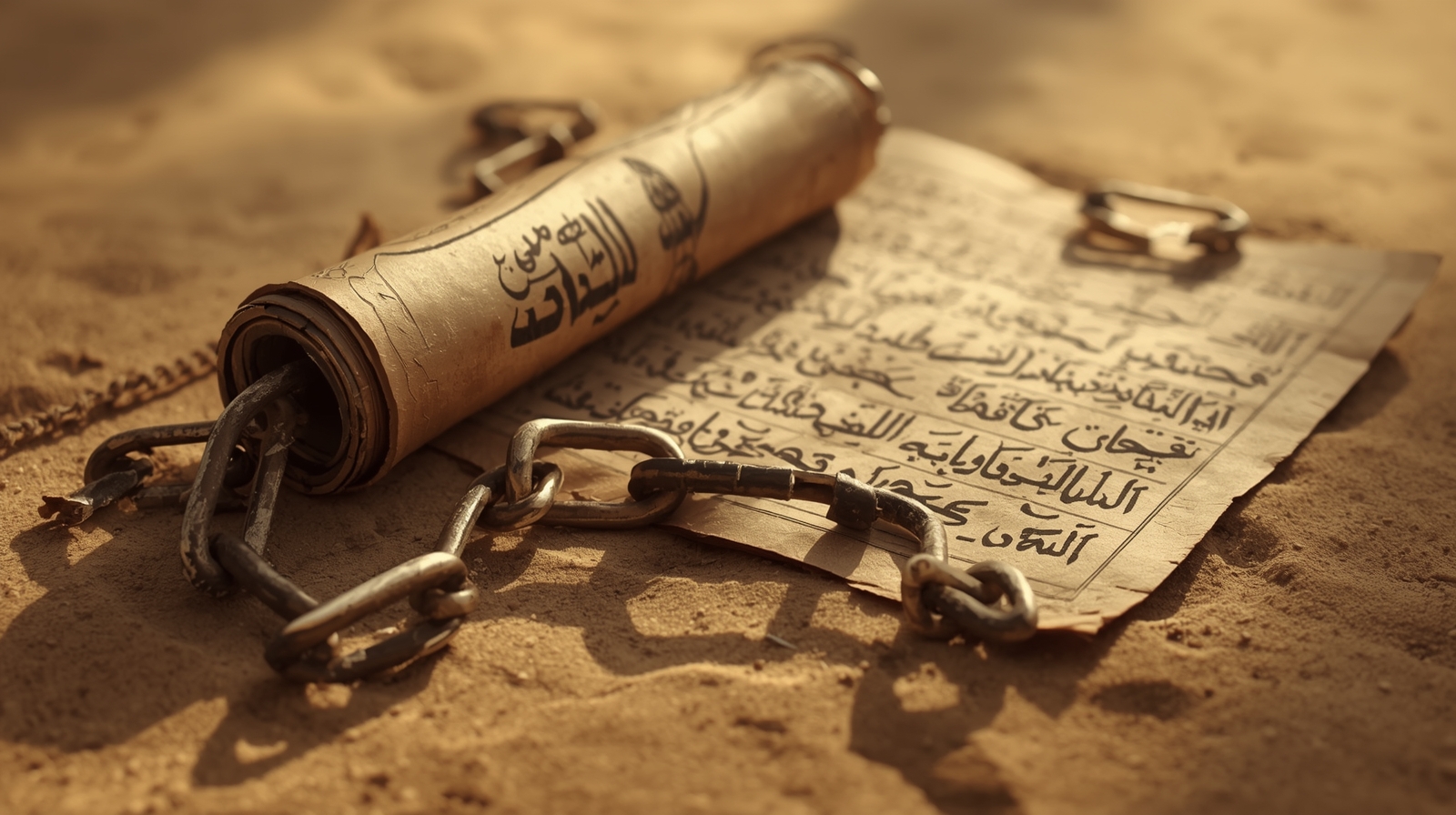
Is slavery permitted in the Quran? – this shocking question often confuses many readers, researchers and even Muslims. Slavery in Islam, Quran and slavery, ma malakat aymanakum meaning, Quran gradual reforms — these keywords have become popular in modern online discussions. Many assume slavery was “allowed” — but when we read the Quran carefully and understand the historical context, we discover that the Quran didn’t create slavery — instead, it strategically dismantled it step by step, without collapsing society.
The phrase “ma malakat aymanakum” (what your right hands possess), mentioned in verses such as 4:3 and 4:36, refers to slaves. The Quran also uses the word “amah” for female slave and “abd” for male slave (2:221). At that time, slavery was globally normal — not just in Arabia — and at least one-third of society in seventh-century Arabia were slaves.
Slavery is not approved by God — it is a human invention.
Even though the Quran does not contain a single verse that says “slavery is forbidden” in one sudden command, slavery was effectively abolished by the Quran — but through a gradual, protected, wise process.
Why gradual — not immediate?
If Allah instantly banned slavery at that moment:
- Millions of slaves would become homeless instantly.
- A huge portion of workers would lose employment.
- Society would collapse economically.
- Women would be forced into prostitution, men into crime.
God’s wisdom is perfect. The cure must not kill the patient.
Therefore, the Quran took a different strategy:
The Quran made freeing slaves a virtue
(4:92, 5:89, 58:3)
Punishment expiation → free a slave.
Marriage rules → treat them equally.
Spiritual righteousness → free them.
After revelation, a believer could not go and buy slaves anymore, because that would go against the direction that God was pushing society toward. Anyone who already had slaves was trained to free them gradually — until the entire institution would vanish naturally without disaster.
The Quran teaches equality
(49:13) — humans differ only by piety, not class or ownership.
Owning another human violates this.
Slavery today = sin
If God’s instructions were followed from the beginning, slavery would have disappeared centuries ago. Any slavery today exists in direct violation of the Quran.
A similar example: Marriage laws were also reformed gradually
The Quran sometimes allowed an immoral practice to survive temporarily — only for those already in that situation — because breaking the family suddenly would cause greater damage.
Example 1 — 4:22
Men who had married women their fathers had married — Quran called this immorality and abhorrence. Yet God said:
“unless it happened in the past”
Meaning: stop new ones, but don’t break existing marriages instantly.
Example 2 — 4:23
Marrying two sisters was prohibited — but again, except for those already in that relationship.
This is the exact same mechanism used for slavery.
Allow existing — stop new — let it end naturally.
Final answers
| Question | Answer |
|---|---|
| Is slavery righteous in God’s sight? | No |
| Does the Quran approve slavery? | No |
| Do the verses about slavery apply today? | No |
The Quran’s mission was to destroy slavery — but with divine wisdom and no social catastrophe.
You are reading this article on Islampidia. Islampidia is an Islamic information website that provides content on theology, Islamic history, jurisprudence, and religious practices. The website is operated by the Islampidia Global Network and was launched in 2023. It offers articles in both Bangla and English languages. The site’s topics include Quranic interpretation (tafsir), Hadith studies, Islamic beliefs (aqidah), and more.
References: