Among the many intellectual and spiritual currents within the global Muslim ummah, the Ismaili Muslim community represents one of the most historically rich and philosophically distinctive branches of Shi‘ite Islam. Their story begins in the earliest centuries after the Prophet Muhammad, but continues today in modern cities across Asia, Africa, the Middle East, Europe and North America. The question “who are Ismaili Muslims” today is not merely a matter of historical classification; it is a subject shaped by living leadership, evolving institutions and an interpretive heritage that sees Islam not only in ritual terms, but also as a civilisational ethic.
Origins and distinctive identity
Ismailis belong to the Shi‘ite tradition. Their most distinguishing feature is their doctrine of a living Imam — the “Imam of the Time.” While all Shi‘a share a belief in the Imamate, the Ismaili branch historically continued recognition of the Imam through an unbroken, hereditary line; they did not stop at the Twelfth Imam the way the Twelver Shi‘a did. From this difference — a single historical branching regarding who legitimately succeeded as Imam — emerged a separate religious community, with its own intellectual traditions, legal interpretations, philosophical schools, and devotional practices.
Today the largest branch of Ismailis are the Nizārī Ismailis.
Head of Ismaili Muslims
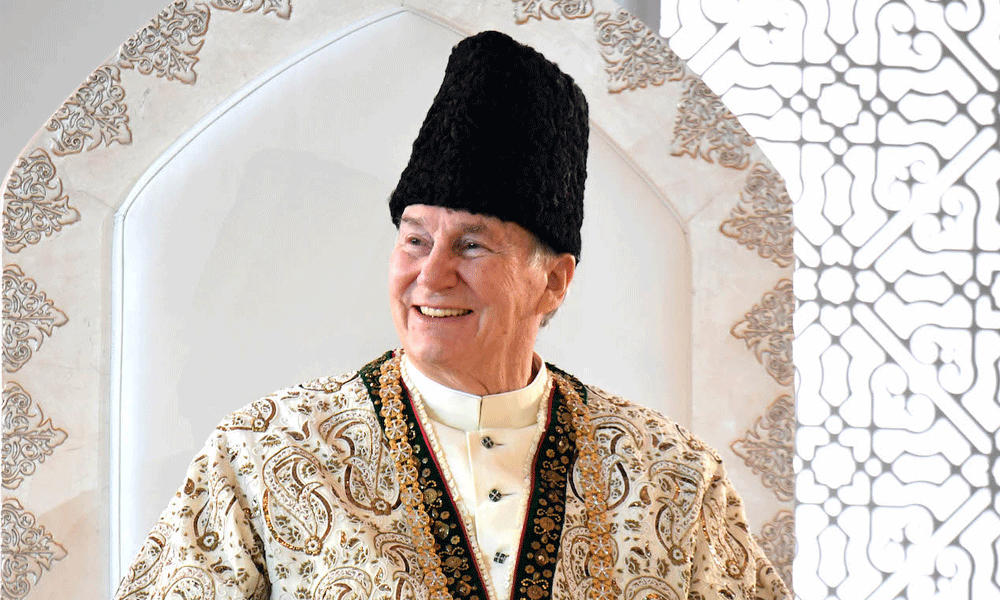
The head of the Nizārī Ismaili Muslims is Aga Khan IV — Shah Karim al-Husayni — who became Imam in 1957. He is the 49th hereditary successor of Ali ibn Abi Talib through the lineage of the sixth Shi‘a Imam, Ja‘far al-Sadiq. In Ismaili theology, the Imam is not simply an administrator or figurehead. He is the bearer of spiritual authority, a teacher and interpreter of the deeper meaning of Revelation.
The role of the Aga Khan has also involved humanitarian leadership. Under his direction, a vast network of development, education and cultural institutions has been established globally — including the Aga Khan Development Network (AKDN) — working in fields ranging from public health to rural development, higher education to heritage conservation. These institutions reflect the Ismaili understanding that faith is not fulfilled only inside places of worship, but also in the building of humane and prosperous societies.
Who Are Ismaili Muslims?
So, who are Ismaili Muslims today in the global context?
They are a religious community spread across more than two dozen countries — from South and Central Asia to East Africa, the Middle East, Canada, Europe and beyond. Their identity reflects both continuity and adaptation: continuity with the earliest periods of Shi‘a Islam, and adaptation to changing historical realities over centuries.
Ismaili Muslims recite the shahādah, accept the Qur’an as the word of God, honour the Prophet Muhammad as the Messenger of Allah, and follow the path of Islam. What is distinctive is their strong emphasis on the inner, esoteric meaning (ta’wīl) of Revelation, alongside the outward, exoteric dimension of law and practice. This does not remove ritual from their lives — but it interprets ritual, scripture and ethics in the broader search for spiritual truth.
Ismaili Muslim Beliefs
While Ismailis share foundational Islamic beliefs with all Muslims — monotheism, Prophethood, the Qur’an, the Hereafter — certain emphases define their tradition:
- The Imamate — the living Imam is the continuing source of spiritual guidance.
- Knowledge and intellect — reason is seen not as a threat to faith, but as a God-given light that complements revelation.
- Ethics and civic responsibility — a believer must contribute to the welfare of society, not merely to personal piety.
- Pluralism — living in a diverse world requires respect for other faiths and cultures.
- Inner meaning — scripture and ritual invite interpretation beyond the literal surface.
This theology has produced a culture of institutions — universities, museums, schools, development agencies — which express religious values through public service.
Aga Khan and contemporary relevance
The Aga Khan is not simply a symbolic figure in Ismailism. For the community, he is both the spiritual Imam and a leader who articulates Islam’s ethical vision in a modern, interconnected world. He has repeatedly presented Islam as a faith of balance — between intellect and devotion, material responsibility and spiritual aspiration.
The Ismaili Muslims are therefore not merely a sub-category of the Shi‘ite tradition, but a living school of Islamic interpretation whose centre is the living Imam. Their understanding of Islam emphasises the unity of God, the dignity of the human intellect, the search for inner truth, and service to society. Under the leadership of the Aga Khan, they continue to present a model of Muslim identity that is rooted in Revelation, yet open to the responsibilities of the present age.
Are Ismailis considered Muslims?
According to the strict classical Sunni view, the Ismailis are regarded as a Bāṭini sect whose core doctrines fall outside the boundaries of Islam. Although they use Islamic words and outward symbols, their belief system — especially their teaching about hidden meanings, secret Imams and the reinterpretation of Qur’ān and Sharī‘ah — is considered by Sunni scholars to contradict the foundations of Tawḥīd, Prophethood, and the revealed laws of Islam. Therefore, in this perspective, their sect is not counted within the orthodox Muslim community.
What is the main difference between Ismailis and other Shi‘a groups?
According to classical Sunni scholars, the main difference lies in the succession after Ja‘far al-Sadiq. Most Shi‘a (the Twelvers) say the Imamate continued through his son Mūsā al-Kāẓim, while the Ismailis say the Imamate passed through Ismā‘īl. From this single point, two separate systems of belief developed. In Twelver theology the final Imam is hidden (ghaybah) and will return, but in Ismaili doctrine the Imam is always living and present in every generation. Today Ismailis follow a present, hereditary leader (the Aga Khan) and attach esoteric interpretations (bāṭin meaning) to Qur’ān and Sharī‘ah, unlike Twelvers and unlike Ahl al-Sunnah.
Do Ismailis believe the Qur’an has a hidden meaning?
They believe the Qur’an has both a literal (ẓāhir) meaning and a deeper inner (bāṭin) meaning. Sunnis also accept that the Qur’an has layers of meaning, but the Ismaili emphasis on esoteric interpretation is stronger and is guided by the Imam. Sunnis rely on tafsīr methods rooted in the Prophet’s Companions, hadith sciences, and juristic tradition.
What is the role of the Aga Khan in daily life?
He is their spiritual leader and provides guidance on ethics, knowledge, community development and interpretation of religion. Sunni Muslims respect scholars and muftis, but do not have a single hereditary leader.
Are Ismailis politically active?
The Aga Khan has consistently emphasised humanitarian development over political ideology. Many Ismaili institutions focus on civil society — education, health, economic uplift — rather than political activism.